The Site Preservation Problem
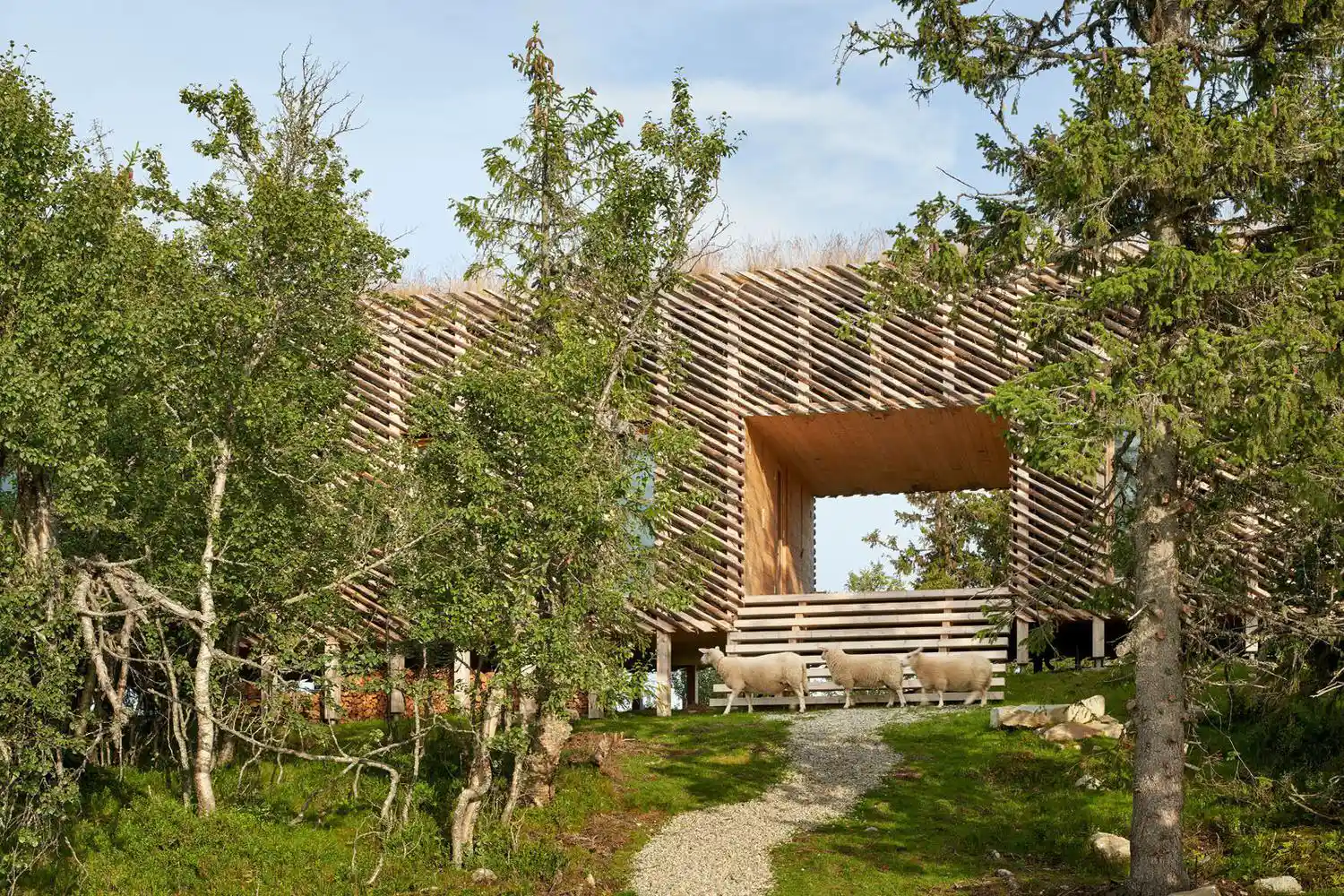
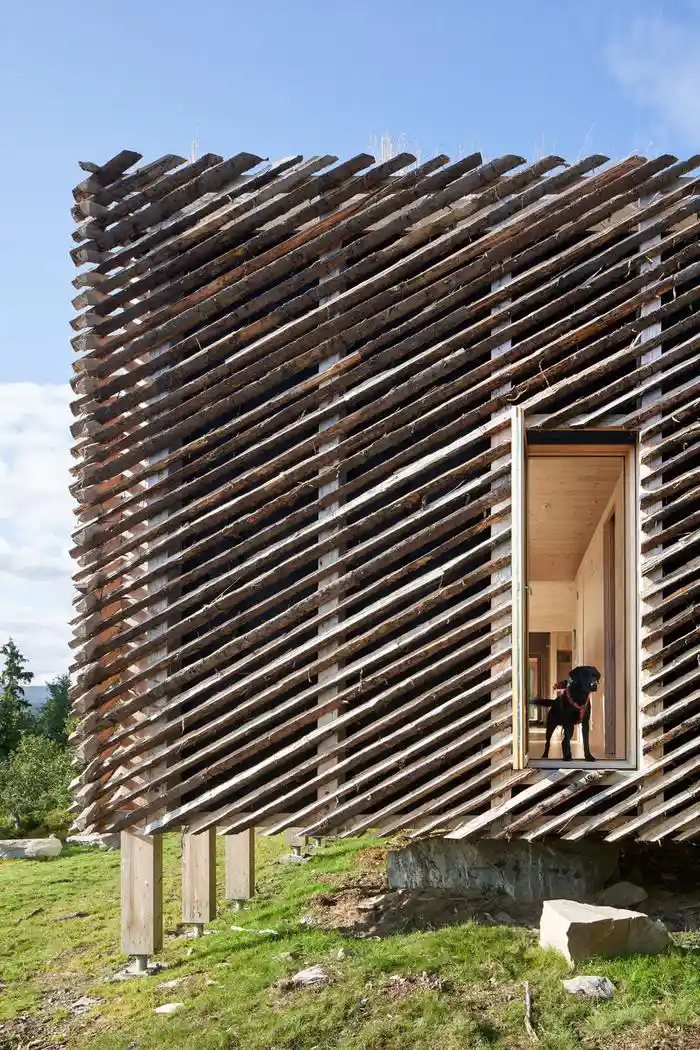
This mountain cabin in Kvitfjell, Norway, had a clear mandate: leave the beautiful landscape untouched and blend the exterior with the rural surroundings. Elevating the structure on 45 wooden columns allowed native grasses and grazing animals to pass underneath, avoiding excavation or grading. The exterior cladding—skigard, long narrow quarter-cut logs traditionally used by Norwegian farmers for fencing—wasn't a nostalgic gesture. It was a contextual response that helped the building disappear into the agricultural vernacular.
Precision & Modularity
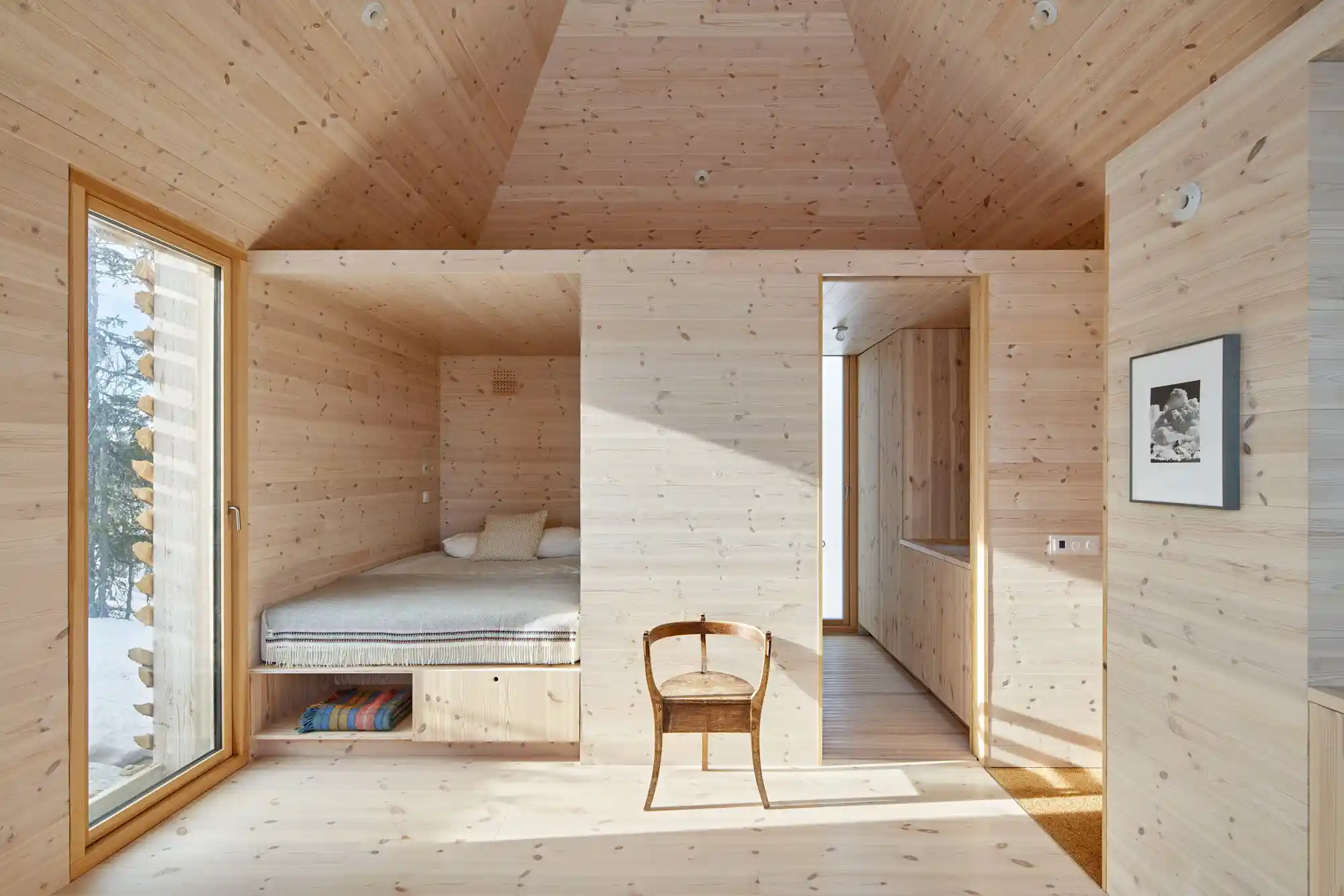
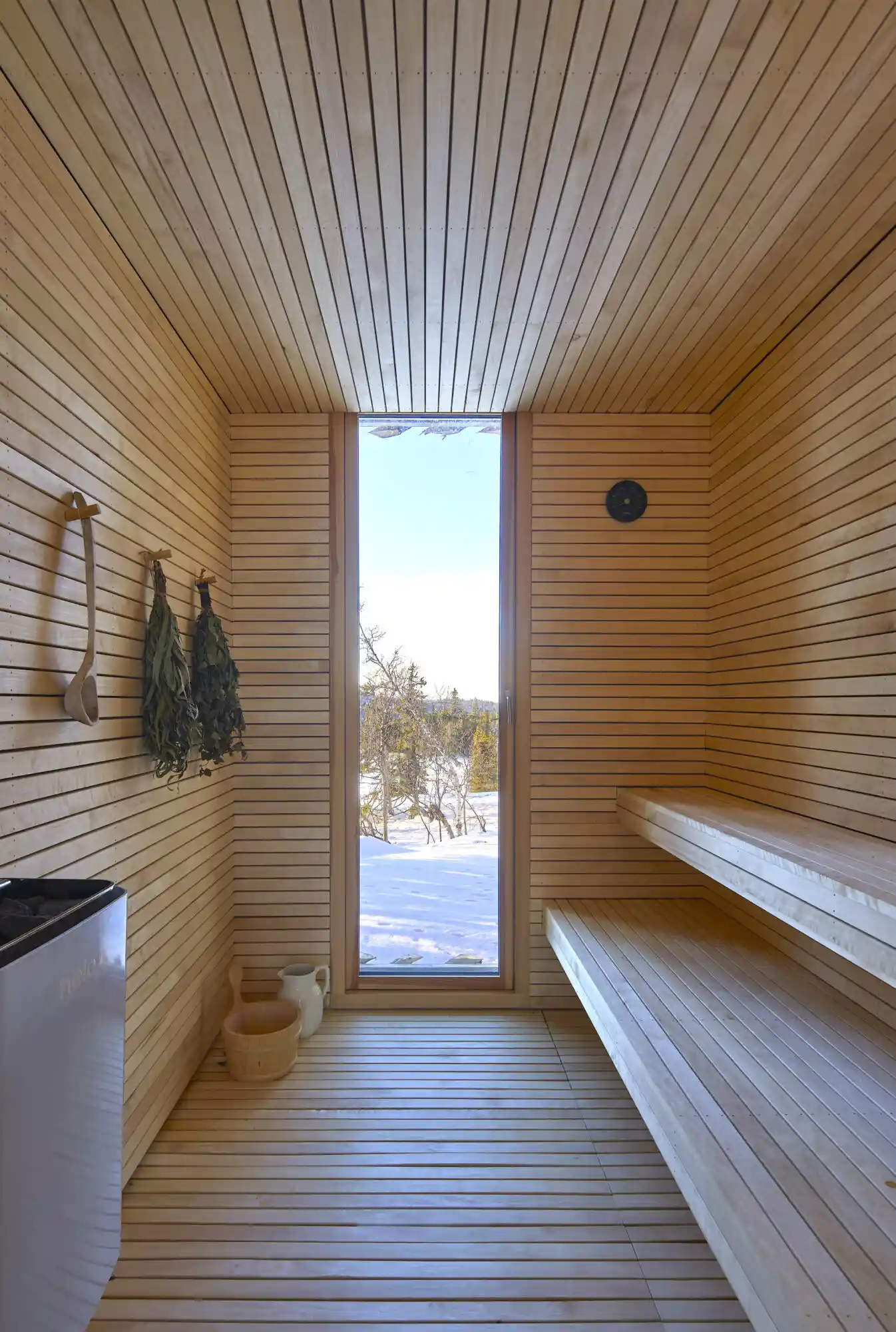
The interior is meticulously detailed: every surface is finished in wood, with walls, doors, windows, and cabinets all exactly 22 boards tall. This modular system simplified construction and created visual consistency, while the all-wood palette and four frustum ceilings provide thermal and acoustic comfort. The design balances rough-hewn tradition with precision execution—a contemporary adaptation of Norwegian building principles.
Impact
The project received the 2020 AIA Honor Award, ArchDaily's Building of the Year 2021, and multiple international awards. It demonstrated that minimal site impact and traditional materials could coexist with modern spatial planning and performance standards—a model for sensitive intervention in protected landscapes.
Project Details
Architect: Mork Ulnes
Role: Project Architect, Design Lead
Photography: Bruce Damonte
Awards: 2020 AIA Honor Award, ArchDaily Building of the Year 2021, AZ Award 2020, Architizer A+ Award 2020
Published in: Detail, The Financial Times, Domus, Dezeen, Dwell